Your Bed Is Winning: The 10-Minute Room Audit That Decides Your Grades Before You Open a Book

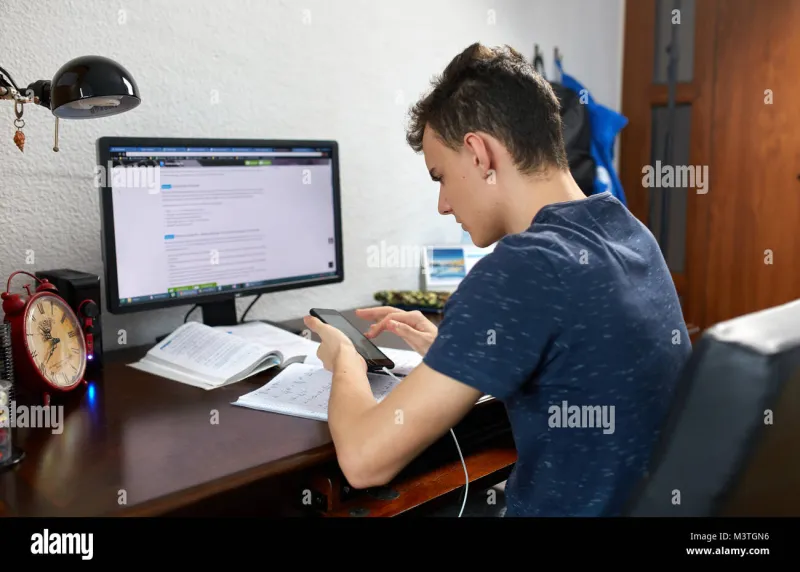
Photo: Basile Morin, CC BY-SA 4.0, via Wikimedia Commons
Here's an uncomfortable question: when you sit down to study, who's actually making the decision — you, or your room?
If you're like most students, you plop onto your bed with a laptop, maybe a textbook, and the sincere intention of grinding through Chapter 7. Forty-five minutes later you've read three pages, sent nine texts, and drifted into what researchers politely call "light sleep." You blame yourself for lacking discipline. But the truth is a little less flattering to your ego and a lot more fixable: your environment was rigged against you from the second you sat down.
Your Brain Isn't Lazy, It's Predictive
Psychologists have a concept called context-dependent learning — roughly, your brain ties what you learn to where you learn it. Studies going back decades (the classic ones involved scuba divers memorizing word lists underwater versus on land) show that recall improves when you study and test in similar conditions. But there's a darker flip side: if your brain has learned that "bed" means "sleep" and "room" means "relax," then every time you try to study there, you're swimming against a current of your own conditioning.
That's why the same student who can't focus for 20 minutes in a dorm room can lock in for two hours at a library table. It's not magic. It's not talent. It's that the library has spent months training their brain: this is where we work.
So the fix isn't more willpower. The fix is a 10-minute audit.
The 10-Minute Environment Audit
Grab your phone, set a timer, and walk through your study space answering these honestly. No cheating.
Minute 1–2: The Bed Test. Can you touch your bed from where you study without standing up? If yes, that's strike one. Your brain associates your mattress with sleep, and that association doesn't take nights off. If you're in a dorm and the bed is unavoidable, at least sit at your desk facing away from it.
Minute 3–4: The Light Check. Overhead dorm lighting at night is famously depressing, but studying in a dim lamp-lit puddle tells your brain it's wind-down time. You want bright, cool, focused light on your work surface — a cheap clip-on lamp from Target or Amazon solves this for under $20. Dim room, alert brain? Those two don't coexist.
Minute 5–6: The Noise Scan. Close your eyes for 30 seconds and just listen. Roommate's TikToks through the wall? Hallway traffic? Some people study fine with background hum; almost nobody studies well with lyrics. If you can't control the noise, you can control your response — foam earplugs cost about a dollar, and a lo-fi or instrumental playlist beats fighting the dorm floor's collective chaos.
Minute 7–8: The Distraction Inventory. What's physically visible from your seat? Your phone is the obvious villain, but also check for: the TV remote, a gaming console in your line of sight, snacks, that roommate who "just has a quick question." Anything you can see, you will eventually touch. Move it or move yourself.
Minute 9–10: The Exit Plan. Where's your backup location? Every student needs a Plan B study spot — a library floor you like, an empty classroom, a coffee shop that doesn't blast music. When your room fails the audit (and many dorm rooms simply will), you need somewhere to go without wasting an hour deciding.
Study Zone Triage: Which Student Are You?
Not every space can be saved, and that's fine. Run your situation through this quick triage.
The Dorm Dwellers. Your room is small and your bed is always right there, so your job is containment, not perfection. Desk facing a wall, phone in a drawer (yes, physically in it), one dedicated lamp that only turns on for studying. Over time, that lamp becomes a switch in your head: light on, brain works. If your roommate is the problem rather than the room, the library isn't a punishment — it's your home field advantage.
The Commuters. You've got the opposite issue: no single space belongs to you. Your move is building a "study kit" — headphones, a consistent playlist, the same notebook setup — so that any table becomes your table. Rituals travel. When the same song and the same setup show up, your brain gets the memo no matter if you're in a campus café or your car before shift.
The Library Nomads. You already know location matters, but you're making a subtler mistake: rotating randomly. Pick two or three go-to spots and stick to them. Consistency builds the association that makes focusing automatic. Also, don't camp next to the group-study tables if you're doing solo work — one loud friend group can nuke an entire floor's concentration.
The One-Week Experiment
Here's your assignment, and it takes almost no effort: after your audit, make one change and hold it for seven days. Maybe it's "phone in the drawer during study sessions." Maybe it's "library on Tuesdays and Thursdays, no exceptions." Track how many focused minutes you actually get per session — not hours sat, minutes focused.
Most students who do this are a little annoyed by the results, because it proves how much time they've been donating to a badly arranged room. Twenty extra focused minutes a night, five nights a week, is nearly two additional study hours weekly — without a single new app, planner, or 5 a.m. routine.
Your GPA isn't built by heroic all-nighters. It's built by a thousand small sessions, and every one of those sessions happens somewhere. Make sure that somewhere is working for you instead of against you — because your bed already has a job, and it isn't helping you pass Chemistry.